
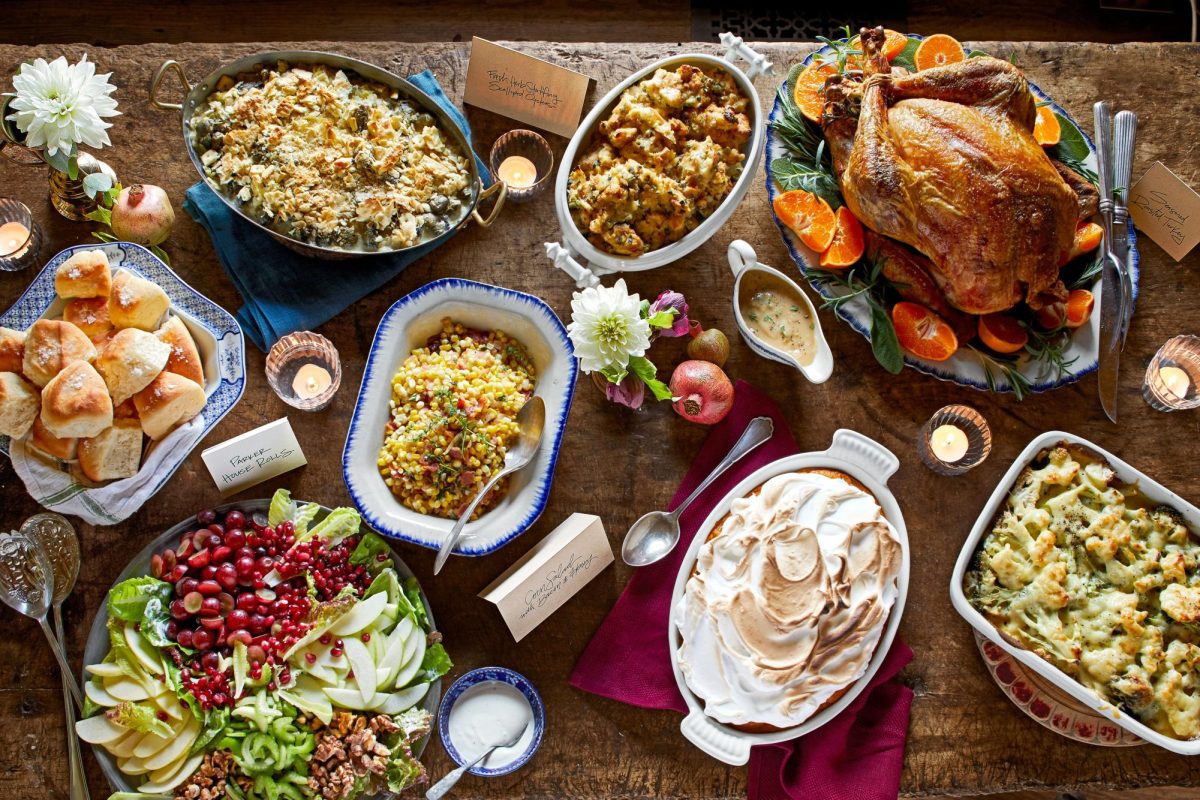
As the holidays approach, keeping track of our diets and eating and drinking nutritiously can be extra challenging. Jessica Tosto, Clinical Associate Professor of Nutrition and Dietetics and Chairperson of the Nutrition and Dietetics Department, states, “Food means a lot more than just calories and protein–there are so many memories, emotions, family traditions, cultural practices, etc. intertwined with the foods we eat, especially around the holidays.”

During the holidays, it is important to enjoy what we eat. And while it is important to reinforce healthy eating habits, Professor Tosto warns us not to deprive ourselves. Instead, she encourages us to enjoy our favorite holiday meals, “especially if you are only eating them once a year!”
However, we must pay attention to how much of each food we eat. Professor Tosto instructs us to “Be mindful of portion sizes.” She explains that using smaller plates will help limit the food you can fit and also give the impression of a fuller plate with larger portions.
Starting a meal off with vegetables can also help lower the number of high-calorie foods we consume. Professor Tosto notes, “When serving yourself, start with vegetables first. Try to fill at least half you plate with veggies so there is less space available for higher calorie foods.”
Eating slowly can allow us to enjoy the flavors and textures of the food we are eating. Professor Tosto urges, “Eat slowly. Savor the flavors and textures of whatever you are eating.”
While enjoying a delicious meal, it is crucial to realize when we start to feel full. Professor Tosto reminds us to “Check in with yourself periodically to see if you are feeling full. You can always ask for a to-go container and bring your leftovers home to enjoy again the next day.”
We must also understand why we are eating. We may not always eat because we are hungry. Professor Tosto suggests, “Before having another portion or reaching for a snack, ask yourself if you are eating because you’re actually hungry. Often times we eat with our eyes (e.g. because the food looks really good or because it is right in front of us and easy to grab) or with our heads (e.g. because we are bored, stressed, sad, happy/celebrating) rather than our stomachs really feeling hungry.”
Before we choose to have a second helping of a food or snack, we must be aware of what is causing us to want to have another portion of that food. Professor Tosto explains, “Even if you still decide to have another portion or a snack, recognizing what your cues are and why you are eating is an important first step in recognizing your own eating patterns.”
Professor Tosto highlights the importance of having regular mealtimes. “You may be used to a certain schedule during the school year and now that you have more downtime, it’s easier to nibble throughout the day which can add up to unneeded calories. Try to stick to regular mealtimes. When you feel hungry, make yourself a plate of food and sit down at the table to eat it.”
Eating fruits and vegetables each day is essential. Professor Tosto advises, “Whether it’s during Thanksgiving break or any time of year, aim for at least five servings of fruits and vegetables each day.”
We can eat fresh or frozen fruit or vegetables. Professor Tosto reveals, “Frozen produce is often just as nutritious, and in some cases even more so. Items that are frozen out of season are usually picked at their peak and preserved quickly, which helps retain more nutrients.”
Professor Tosto highlights what we must pay attention to when consuming canned fruits or vegetables. “If you are choosing canned items, look for low sodium options. If possible, soak in water or rinse thoroughly to reduce some of the salt content.”
Professor Tosto also discusses the benefits of purchasing fruits and vegetables that are in season. “If you are buying fresh produce – look for fruits and vegetables that are in season, such as oranges, pears, apples, squash, carrots, sweet potatoes, spinach, collard greens, and broccoli. They will taste much better and be less expensive than out of season produce that has to be shipped from much further away.”
In addition to eating fruit and vegetables, we must incorporate lean proteins and healthy fats into our diets. Professor Tosto advises us to include lean proteins and healthy fats that are minimally processed such as fish and seafood, whole turkey or chicken (not deli slices), eggs, beans, lentils, tofu, avocado, olive oil, nuts, and seeds.