

Held annually in March, National Nutrition Month focuses on the importance of making informed food choices and promotes healthy eating habits.
At Pace University, the Nutrition and Dietetics Program is a two-year, full-time masters program offered through the College of Health Professions (CHP). Christen Cooper is an associate professor at Pace and founding director of the program.
“I founded a program that’s unique in the United States in that it’s a culinary nutrition program where students are in the kitchen three times a week, cooking for different cultures and ages,” Cooper said.
The kitchen is Zwilling J.A. Henckels, located right in Pleasantville on Marble Avenue. This past month, I got the opportunity to observe a class titled “World Foods”, where students learn about and cook food from different cultures.
Cooper explained how the class has a focus on affordability, prioritizing whole foods and minimizing ultra-processed foods. She also talked about the final capstone project for students in the class.
“Their capstone is a research paper, but what needs to go along with that is a cookbook chapter and a recipe that they develop and test.”
I spoke with Mary Opfer, the Director of the Nutrition & Dietetics Teaching Kitchen who teaches World Foods.
“Typically, we do discussion questions based on the culture we are covering that week,” Opfer said. “Then we come in here and cook recipes from that culture, and when it’s finished we talk about the positive and maybe the not so positives of what’s going on, and then as dieticians, we discuss how we can help our patients in that culture meet or change their needs.”
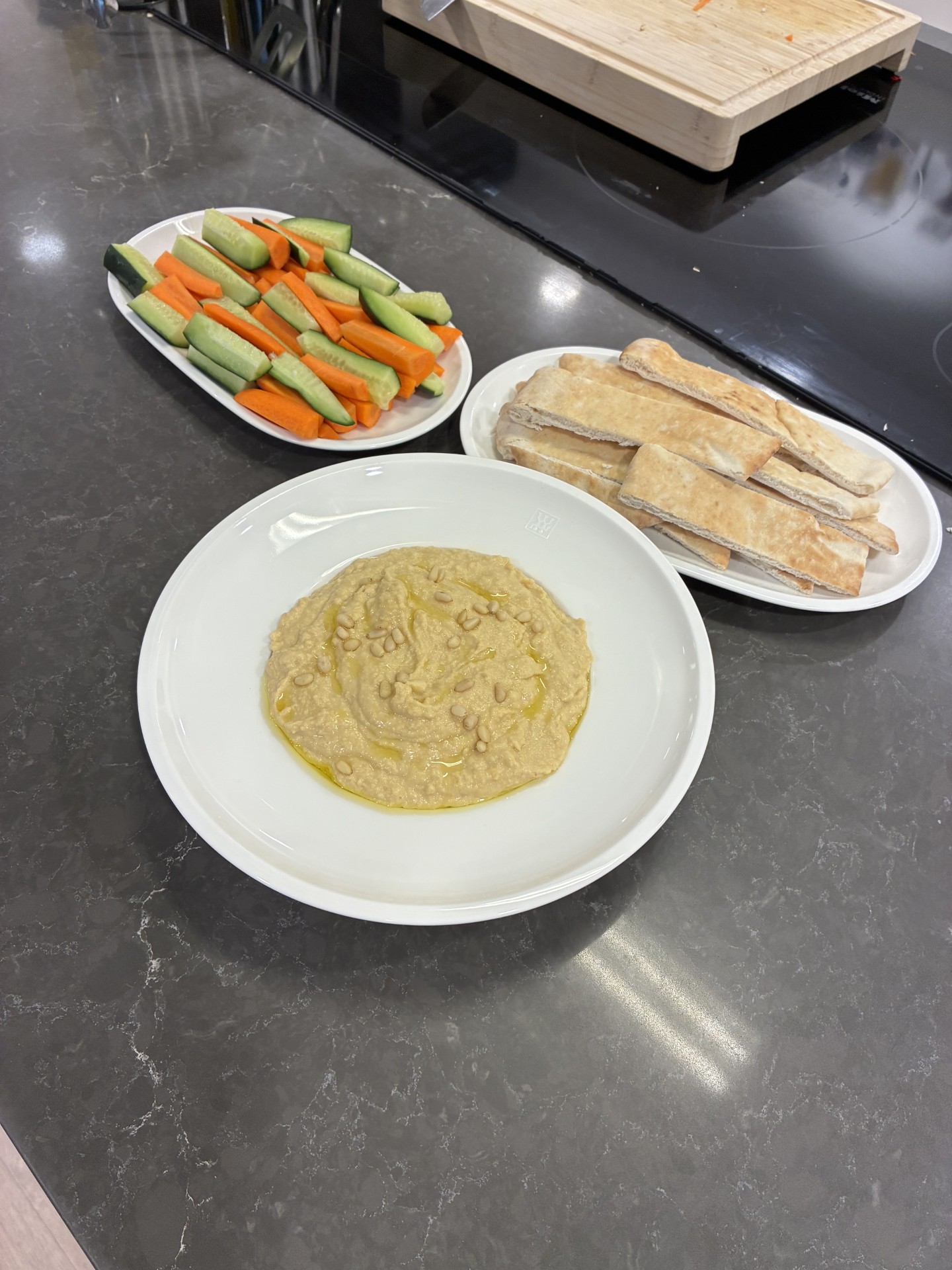
On this day, the students were focusing on Middle Eastern culture, making dishes such as Baba Ganoush, hummus, and tabouli.
Opfer hopes that her students take away from this class the power of food as a connector.
“Students should be aware that food is a way for them to connect with their patients. If they know something about their culture of foods, you make friends. The patient sees you as worthwhile to talk to.”
Opfer also gives advice to students who want to make healthy choices, but are struggling to do so.
“Try to eat less processed foods. Students can go to the food pantry on campus, and have access to online recipes. It’s also important to know how to read a label.”
Carly Martone, a student in World Foods, explains her experience with the class.
“I love making new recipes, and especially with this class, it’s great to get my Monday started by doing something I enjoy,” Martone said. “I love being able to explain the nutritional benefits of each meal, and also be able to enjoy each meal with everyone. It is a challenge figuring out how to cook recipes that I’ve never cooked before, but it’s also rewarding because I get to learn new recipes.”
Another student, Emily Bruzzese, also explains her experience with World Foods.
“Since I fell in love with nutrition, cooking has always been a part of my life. I think what this class really offers is diversity into learning different types of cultures and ways of cooking, which I am new to.”
Bruzzese also talks about her final capstone project.
“For my paper, I’m researching how to heal the intestinal lining for patients who have Crohn’s Disease, so my recipe book is for those patients. That has been really fun to build because the recipes are based off science. I’ve been able to be creative, I taste test the foods at home and see what I want to add.”
During National Nutrition Month, Cooper plans to meet with Pace Athletics Director Mark Brown and team coaches to discuss programming opportunities, such as taking teams to the cafeteria to learn how to make healthy, affordable choices, as they have done in the past. Additionally, she will be working with Chartwells to implement more signage relevant to nutrition.