
Students at Pace may have noticed changes in familiar environments lately. The school has been undergoing lots of additions and improvements to the campus at the Mortola Library, Alumni Hall, Kessel Student Center, and Miller Hall.
This article is an overview of how all of these improvements came together and where or what they are:
1) Pods + Help Desk
A trend on college campuses lately has been to add singular study rooms known as pods to maximize focus for students who use them on their own. Rose Gillen, the Director of the Mortola Library, was interviewed on the process of how these arrived and were set up along with an upgraded design to the library.
What company or business did the pods come from? We used funds from Eva Reiman who worked at the library from 1984 to 1997, and the furniture is fully funded by her inheritance money. It was my idea to buy these to zoom into a class as there’s no privacy for single students. Three was the only number of pods we could afford. Pace doesn’t have the money to afford them.
What is the technology that makes the pods soundproof? It’s the way they’re built, the company makes enclosed rooms and they will silence 30 decibels. We looked at three different manufactures in NYC and settled on Framery. We picked those particular pods because we loved the design. There’s ventilation and you can turn it up or down. There’s no technology except for the lighting and desk mover.
What was the process like for doing the improvements? How long did they take? They came in pieces and constructed them here. They had a whole day to put them together. We bought them with the wheels and we might buy another next year. As of now, they’re all by the Henry Baum conference room.
How was constructing the new circulation desk sign? We had focus groups last year and realized students don’t always know what resources the library has to offer or what libraries do and provide in general. The redesign of this is trying to get students more comfortable here. We worked with Pace Facilities who brought in the painters and builders and are currently waiting for a “research desk” sign here at the front desk.


2) Fixed Doors at Miller Hall
Students were aware of the poor condition Miller Hall’s doors were in; to most people’s frustration they would always lag or not close properly after being opened. It would be awkward for them if they would stay behind to hold the door for someone and fumble it on their end. Luckily, these were upgraded too.
Nicole Lugo, the Assistant Director for Facilities Operations and Communications for the campus Facilities and Planning Department in Pleasantville, was asked about the process.
What was the process like for contacting Facilities and/or another resource to come in and fix the doors? Over time, the Campus Planning and Facilities team received multiple complaints about the doors at Miller Hall not working properly. Many work orders were submitted through the university’s facilities request system, and after assessing the issue, it was determined that the doors—original to the building—had outdated hardware and closers that were no longer functional. This led to the decision to fully replace them.
How long did it take to fix the doors? What tools were involved and did they have to be taken out? The existing doors were fully replaced with new units. The manufacturing process for the new doors took approximately six weeks, followed by one week for installation. During installation, the old doors and frames were removed to accommodate the new assemblies. Standard construction tools were used, including drills, levels, and framing equipment, to ensure proper alignment and secure installation of the new doors and frames. The replacement of the pond facing doors at Miller Hall is part of an ongoing systematic program of door replacements around campus. Two doors in Miller and one in Lienhard were replaced last year.

3) Lockers & Computers
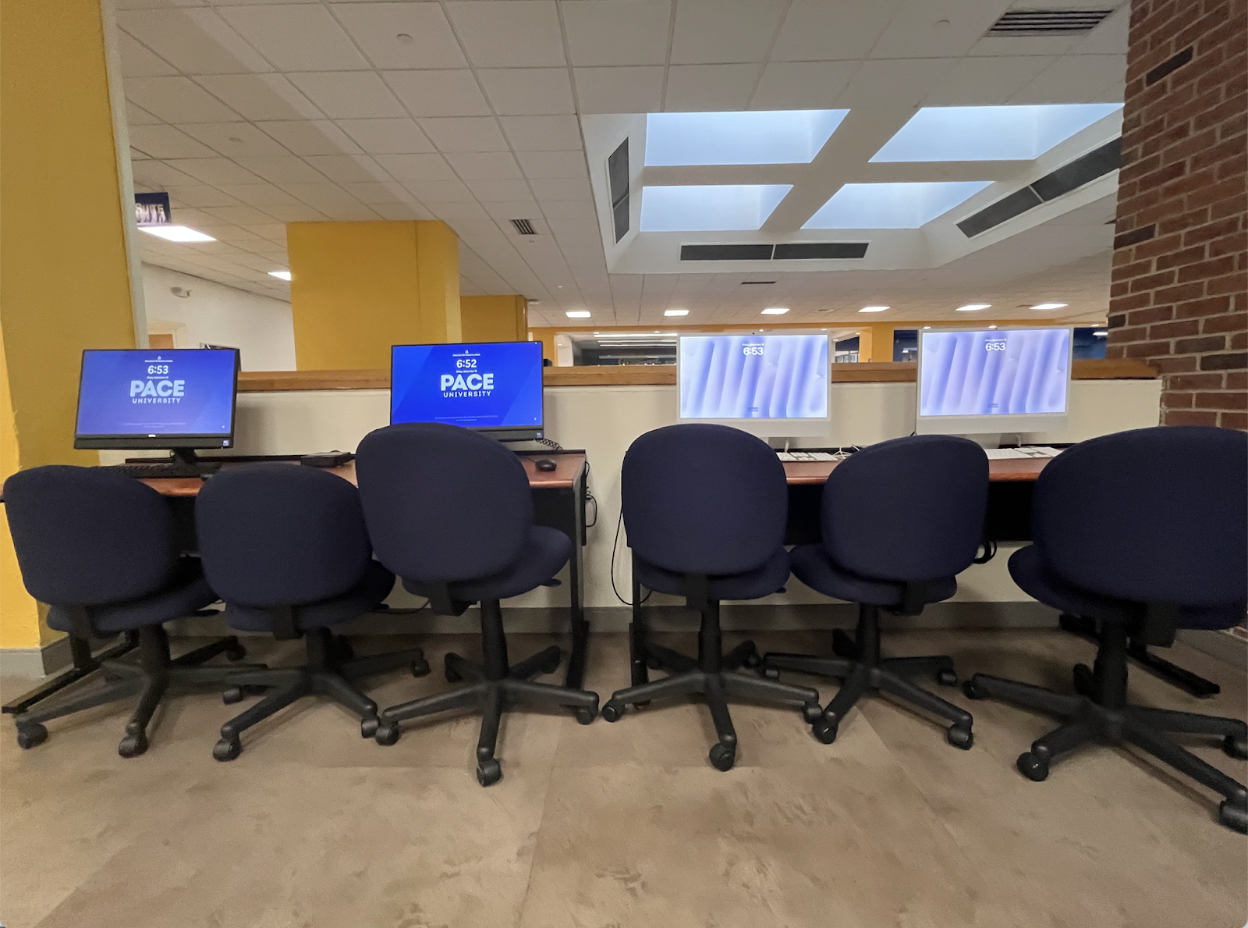
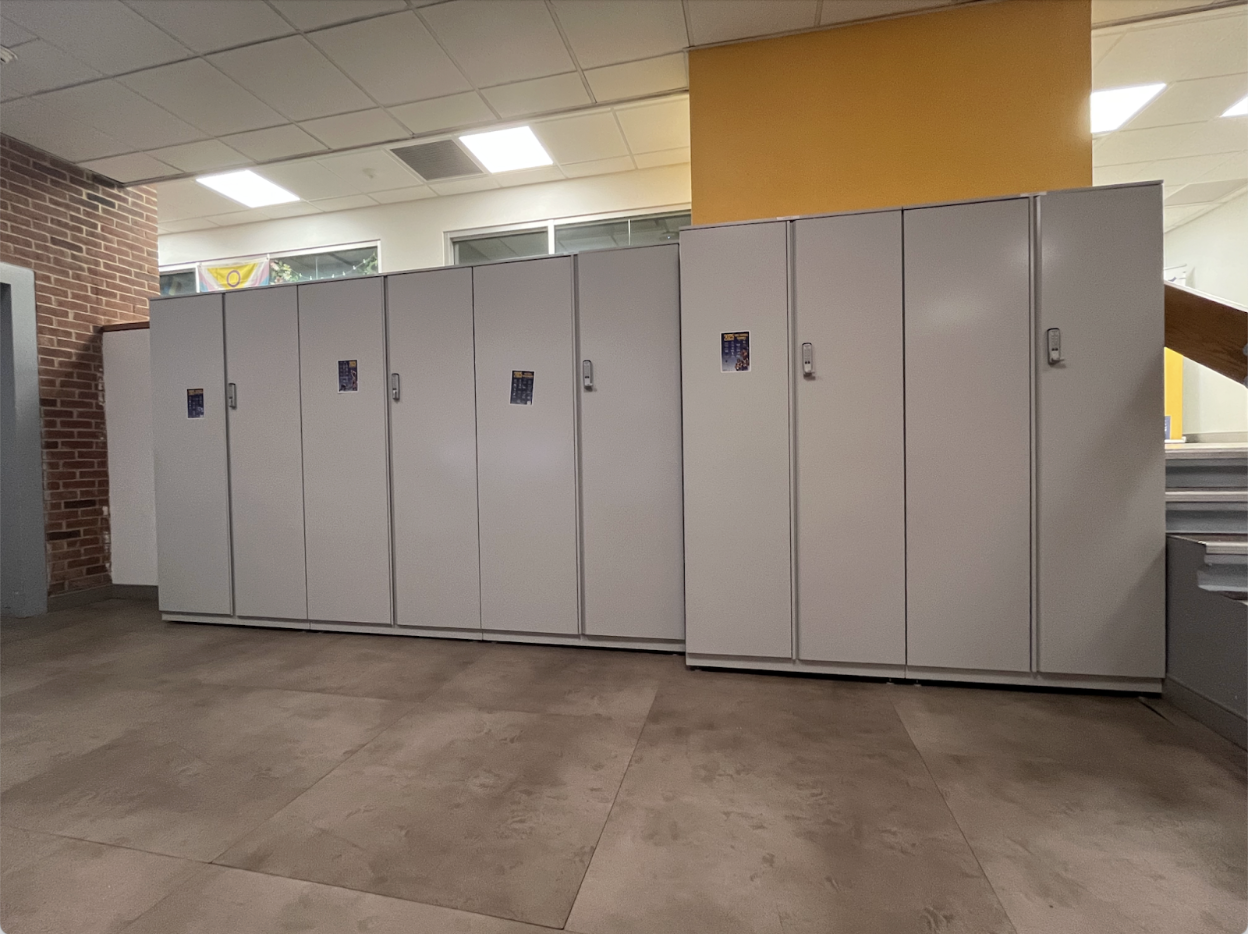
New lockers were placed next to some desktop computers at Kessel. In addition, computers were also placed on the third floor of Miller Hall right next to the printer. One may think it’s a sign of being back in high school as college students aren’t used to having these as we either dorm and have our own rooms to put our stuff in or commute back and forth from houses. Aisha Moyla, the Assistant Vice President for Campus Planning and Facilities, was asked about the inclusion of these and what they do.
What purpose do the lockers serve? How were they shipped and how were they constructed? The lockers in the Kessel Computer Center were added to provide secure, 24/7 access for Student Government Association (SGA) groups to store their materials. Previously, SGA items were stored in the Butcher Suite Storage Room, which had limited access—especially during events or after hours. The lockers now allow student groups to retrieve their items anytime, without needing security assistance.
The lockers were purchased through WB Mason, The University’s office supply vendor, to save costs while maintaining quality. They were shipped and installed on-site.
Was there any reason(s) in particular the computers and the lockers were put in their respective places? Yes, the computers now located in Miller Hall and the Kessel Student Center were relocated from the Willcox Computer Resources Center. During the spring semester, I met with the Student Government Association to gather input on the most useful locations for these computers. Based on their feedback, we chose Miller Hall and Kessel to better serve student needs. Campus Planning worked with Student Affairs and the Dean for Students to design a solution that was both functional and attractive.
Why were the particular vendors used for the lockers and computers? Have they worked with Pace in the past? The computer relocation was handled internally by staff from Campus Planning and Facilities, in collaboration with ITS (Information Technology Services). As mentioned above, the lockers were purchased through WB Mason, Pace’s office supply vendor, to save costs while maintaining quality.
4) New Banner on the Side of Alumni Hall
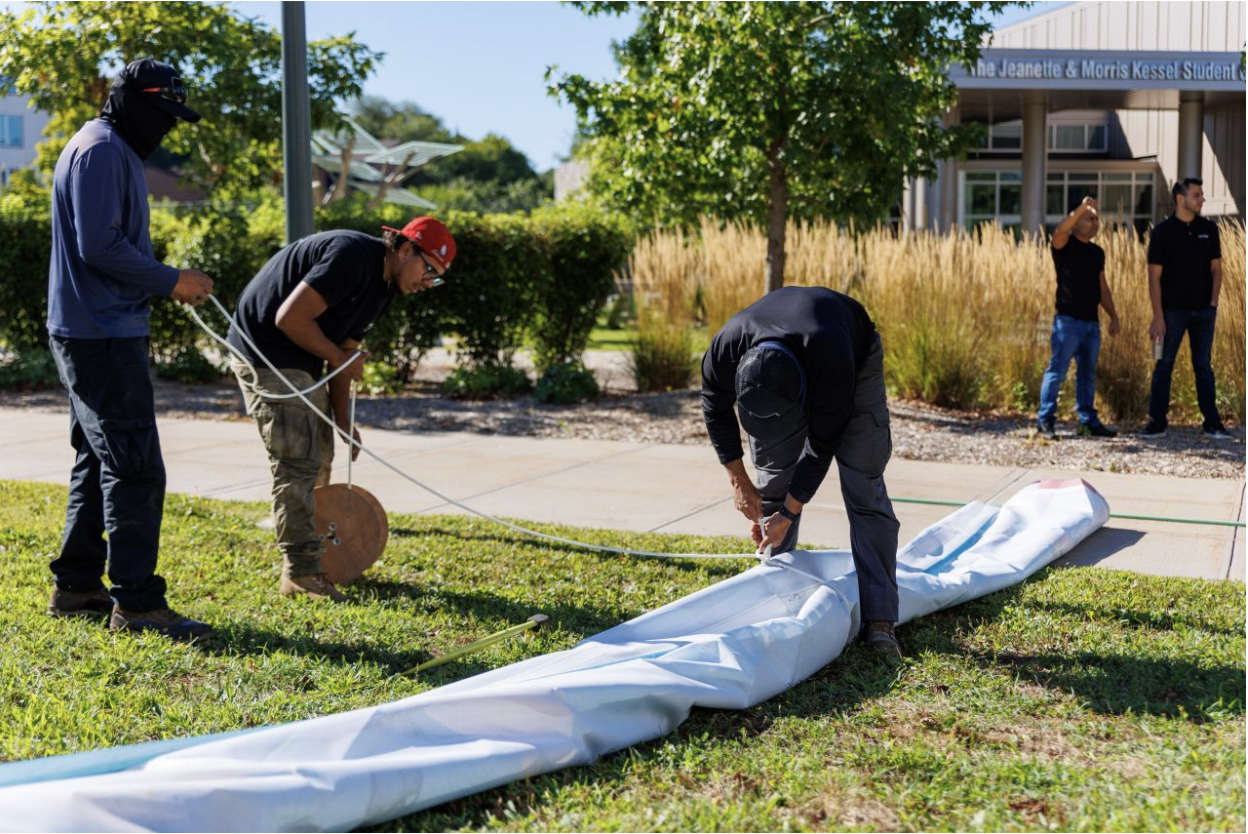
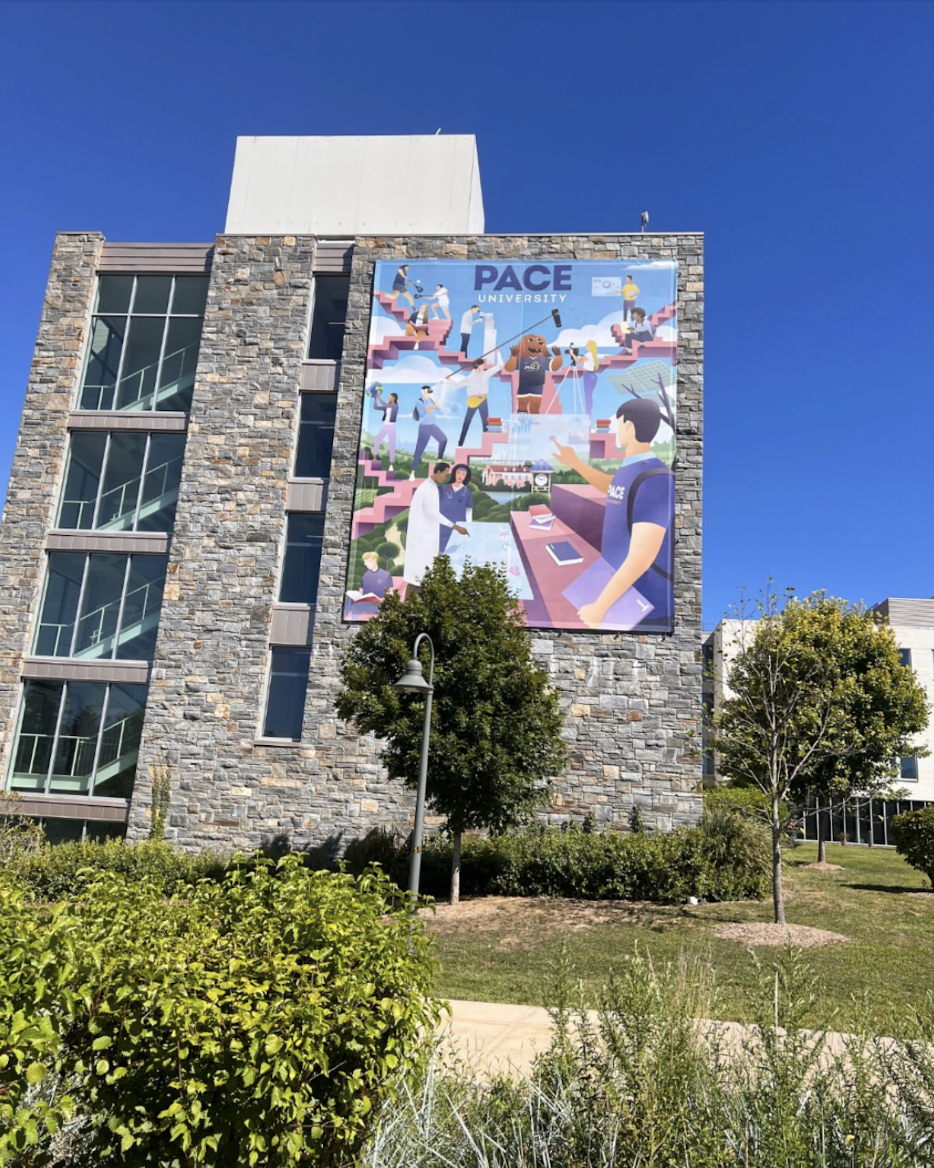
Possibly the biggest and most notable change of scenery was the unveiling of a brand new banner at Alumni Hall. The Pace Instagram page posted four pictures and teased something new for students to witness this semester. Numerous posts teased pieces of the artwork and finally came together at the end of the summer. Marco Boccioli, the artist who designed the poster, is based out of Germany and was contacted about the creative process.
How were you hired in the first place? Did Pace do any research on your background and credentials? Pace reached out to my agency, Mendola Arts, and while reviewing their portfolio, they came across my work. They asked about my availability, and since I was free, the agency connected me with Burke Ali, the art director.
Were you told to do a design by the school? Did you come up with something on your own? Was it a bit of both? I first met with Burke Ali to go over the project details before developing several concepts. When I presented them, he was particularly drawn to the idea of staircases as a symbol of growth and future success. Once he approved the sketch, I refined the details and then moved on to coloring the full illustration.
Were any shipping fees incurred? There were no costs involved since I delivered the final artwork digitally, while the university took care of the printing.
All of the new expenditures had a lot of work in installing them but getting the logistics right too was a process in and of itself. Some may not look like much or do a lot, but they will give the campus a new feel and make things easier.