
A Brief History of Women’s Sports
Women have been a part of athletics dating all the way back to Ancient Greece. Wrestling, javelin throwing, foot racing, and discus were all common sports for Spartan women. For the tribal women of Africa, participating in athletics was a ritual in which they demonstrated their power and strength.
Jumping forward roughly 2,000 years, women’s sports took a major hit. The age of sexism was among the people of the Victorian era. Men were under the impression that physical exertion could “harm their reproductive organs”. Participating in sports as a Victorian woman was seen as unattractive and undesirable to men. Which, as everyone knows, was not a good look to have in the Victorian age.

The idea that women were weak and frail held women back from competing in higher-level athletics. In the 1922 Olympics, there was a strong drive to prevent women from running any farther than 200 meters because it made the women “appear out of breath”.
Nearly 50 years later, Title IX had a huge impact on women’s athletics. Officially passed in 1972, Title IX “requires that schools allocate athletic participation opportunities in a nondiscriminatory way”, thus allowing women to compete in college athletics.
Even after the success of Title IX, women continue to face scrutiny for participating in sports. Women’s athletic uniforms began to stir a controversy over whether women’s sports were being watched for their athleticism or for their bodies.
Women’s Athletic Uniforms: Sporty or Sexy?
Although women have come a long way from the athletic corsets and long skirts they wore in the 1900s, women’s athletic uniforms are still sensationalized in the public eye.
During the early 20th century, women’s sports uniforms were deemed unsuitable if they were to “distract the male athletes”. Although women’s uniforms were more comfortable during this time, they were still restrictive. With the uproar of Hollywood and celebrity fashion, sports uniforms for women became shorter, accentuating the legs and arms.
In the late 20th century, women’s athletic wear became less about functionality and more about sex appeal. While men’s uniforms were baggy and comfortable, women’s uniforms were tight-fitting and flattering for the female body.

Today, women are still struggling to wear a uniform that is functional and comfortable for their sport. In the 2021 Olympics, the Norwegian handball team fought Olympic standards to opt for a more modest uniform. The team wanted to compete in shorts, opposed to the bikini bottoms given to them by the Olympics. After their request was ignored by the Olympic board, the team wore shorts in protest. In turn, the team was fined $175 per player.
One of the most infamous attempts to sexualize women in sports was in 2012, when the Badminton World Federation tried to force women to wear skirts so they would “look feminine and have a nice presentation.”
Olympic medalist Angela Schneider states that “It’s not about athletic-wear that is designed to get the maximum and best performance for her specific sport. Instead, it’s designed to draw on the onlooker.” It’s clear that women’s modern athletic uniforms were not manufactured for functionality, but rather for the audience’s viewing pleasure.
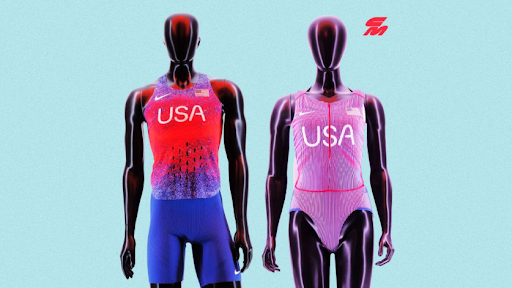
When the 2024 Olympic track and field uniforms were unveiled, many women were outraged by the high-cut bikini line compared to the long shorts of the men’s uniforms. National Champion runner Lauren Fleshman wrote, “women’s kits should be in service to performance, mentally and physically. If this outfit was truly beneficial to physical performance, men would wear it.”
With all that being said, much progress is still yet to come in the world of women’s sports. Nonetheless, conditions for female athletes improve with every passing year.