

Many students are aware of the dangers of AI in the workforce, but are enough aware of the environmental dangers of AI? According to a survey, 66.7% of participating Pace students stated that they have used AI during their time here, while 33.3% of students claimed they have never used AI. When those who have used AI were asked what they had used it for, there was a variety of answers given, though the general consensus was that they used it for homework or studying.
Students were also asked if they were aware of the environmental impacts of AI, and 72.2% of participants claimed they were aware of the environmental impacts, whereas 27.8% of participants were not aware. Though a large portion of surveyed students were aware of some of the environmental impacts surrounding the use of AI, there are many underlying issues that have not been addressed enough in mainstream media outlets.
What makes generative AI so dangerous? Water consumption and greenhouse gas emissions are two problematic factors of generative AI. Data centers, the facilities that are crucial in powering artificial intelligence platforms like ChatGPT, require mass amounts of energy and water, while also emitting “forever chemicals” which are actively contributing to global warming. According to the Environmental and Energy Study Institute, each 100-word AI prompt requires about 519 milliliters of water to cool down the system responding to said prompt.
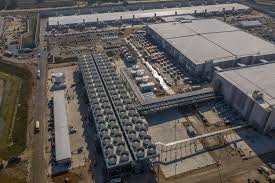
Though this seems like a small amount, ChatGPT, the most frequently used generative text AI platform, has an estimated 122.5 million users daily, and with each of these site visits, every 100 words typed in per visitor requires one water bottle to cool down the processor chips. Water consumption is such a pressing issue because though the earth is made up of 71% water, less than 1% of this water is usable by humans, so with the influx of AI usage, and the increasing amounts of data centers appearing globally, our Earth’s water supply is continuously threatened.
Water usage is not the only risk posed by data centers, however; perfluoroalkyl and polyfluoroalkyl substances (PFA’s) are manufactured chemicals that pose risks to human health, and the health of our environment as they are nearly impossible to get rid of. These chemicals are found in the same cooling systems that have a high demand for water. Chemicals such as nitrates, disinfectants, azoles, and other compounds are added to the water used to efficiently cool microchips, but these chemicals are then released into the air. They are tokened “forever chemicals” because it is nearly impossible for them to be fully destroyed thus making it so difficult to safely dispose of them.
In most cases, these chemicals leech into the air or nearby waste/storm water supplies when leaks and spills occur. PFA’s can also leech into soil and poison drinking water. They have detrimental effects on the health of our environment, but also human health. Per the CDC, exposure to PFA’s is believed to lead to increased cholesterol levels, changes in liver enzymes, kidney and colon cancer, and various other medical conditions.
You may ask yourself, “what can we as students really do to limit this environmental impact?” To that, I raise the idea to limit your use of generative AI platforms. Instead, utilize resources for research and problem solving like our library databases. If you are struggling with homework or studying techniques, take a visit to the learning commons. These small changes we make as students may have a greater impact than we could ever imagine. As students, it is imperative that we take a stance and do our part to protect our planet for our futures, and the futures of generations to come.